
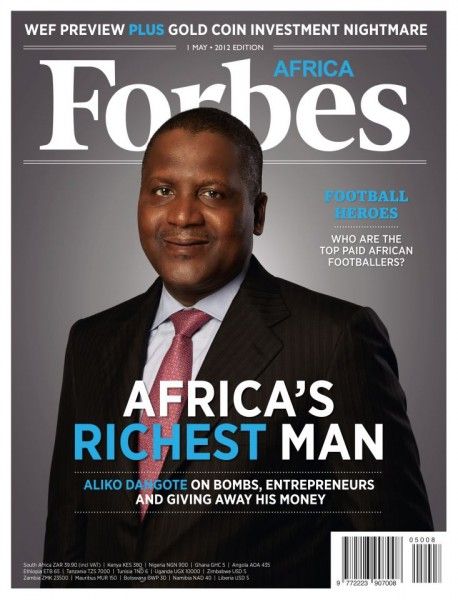


Born on April 10, 1957, in Kano, Nigeria, Aliko Dangote inherited a legacy of commerce from his great-grandfather, Alhaji Alhassan Dantata, once one of the wealthiest traders in West Africa. After earning a business degree at Cairo’s Al-Azhar University, Dangote returned home and launched his first business in 1977 with a $3,000 loan from his uncle—importing staples like sugar and rice. He repaid the loan in just a few months, setting the stage for a long career defined by expansion and self-financing.
By the early 1980s, he had incorporated the Dangote Group, which would grow from basic commodity trading into one of Africa’s largest industrial conglomerates. Dangote expanded his focus to flour, salt, pasta, and especially cement. Today, Dangote Cement is Africa’s largest producer, operating in ten countries and producing more than 600 million tonnes annually. With an 85–86% ownership stake, the company contributes the bulk of Dangote’s wealth.
Industrial Growth and Influence
The Dangote Group’s other ventures include sugar refining, fertilizer, salt, food processing, logistics, and real estate. These businesses supply everyday products that shape Nigerian life—flour for bread, sugar and salt for cooking, and cement for homes and roads. His investments also extend across Africa, with operations in Ghana, Ethiopia, Zambia, Cameroon, South Africa, and more.
Dangote’s boldest project yet is the Dangote Petroleum Refinery, a $19 billion+ facility located in Lekki, Lagos. Commissioned in May 2023 and operational by early 2024, it can refine 650,000 barrels of crude oil per day, making it the largest single-train refinery in Africa. The refinery started with diesel and jet fuel, adding petrol production later that year. It has already begun reducing Nigeria’s dependence on imported fuels and has started exporting to global markets.
As reported by the Wall Street Journal, Dangote called the refinery “the biggest risk of my life.” Funding it required asset sales, large bank loans, and intense coordination. The refinery has since begun shipping products to Europe, Asia, South America, and even to Saudi Aramco.
Despite challenges with crude supply and logistics, the facility is expected to help stabilize Nigeria’s economy. According to the Financial Times, local fuel prices have already started falling, triggering a price war that is reshaping the country’s downstream oil sector.
Wealth and Recognition
As of 2025, Forbes estimates Dangote’s net worth at $23.9 billion, while the Bloomberg Billionaires Index puts it closer to $28.1 billion. He remains the richest person in Africa and ranks among the world’s top 85 billionaires.
His wealth, however, is not just a personal milestone—it signals the strength of African industrial capacity and how locally-driven solutions can address deep infrastructure and economic gaps.
The Aliko Dangote Foundation
In 1994, Dangote founded the Aliko Dangote Foundation, which is now the largest private philanthropic organization in sub-Saharan Africa. Endowed with $1.25 billion, the foundation focuses on child nutrition, public health, education, and economic empowerment. It played a major role in the campaign to eradicate polio and partnered with the Bill & Melinda Gates Foundation to improve immunization coverage in northern Nigeria.
During crises such as the Ebola outbreak, COVID-19, and regional flooding, the Foundation supported emergency health response, food aid, and infrastructure development. Through initiatives like CACOVID (Coalition Against COVID-19), Dangote helped coordinate business-led relief efforts on a national scale.
He has also supported schools, rebuilt communities affected by insurgency, and donated infrastructure such as hospitals and university housing.
Criticism and Environmental Concerns
While the refinery is celebrated for its economic potential, it has also drawn criticism. According to The Guardian, the construction displaced local fishing communities and raised concerns about pollution, water access, and environmental sustainability. Communities around the refinery have struggled with land rights and the erosion of traditional livelihoods.
Such challenges raise important questions about balancing industrial ambition with social responsibility—a tension that continues to shape public discourse about Dangote’s legacy.
Legacy and Vision
Dangote holds the Nigerian national honour of Grand Commander of the Order of the Niger (GCON) and was named Forbes Africa Person of the Year in 2014. More than accolades, however, he is widely recognized as a symbol of African reinvestment.
He frequently urges fellow African billionaires to keep their capital on the continent: “If we don’t make Africa great, no one else will.”
His ventures are proof of what’s possible when African industries are built for long-term local transformation—when the products we rely on daily are not just imported but produced, refined, and owned here.
Aliko Dangote’s impact on Nigerian daily life is visible in bags of cement stacked at construction sites, in the fuel sold at filling stations, and in the sugar and salt on kitchen shelves.