From WhatsApp to the World: How Social Media Fuels Nigeria’s Poetry Scene| Chinaza James-Ibe
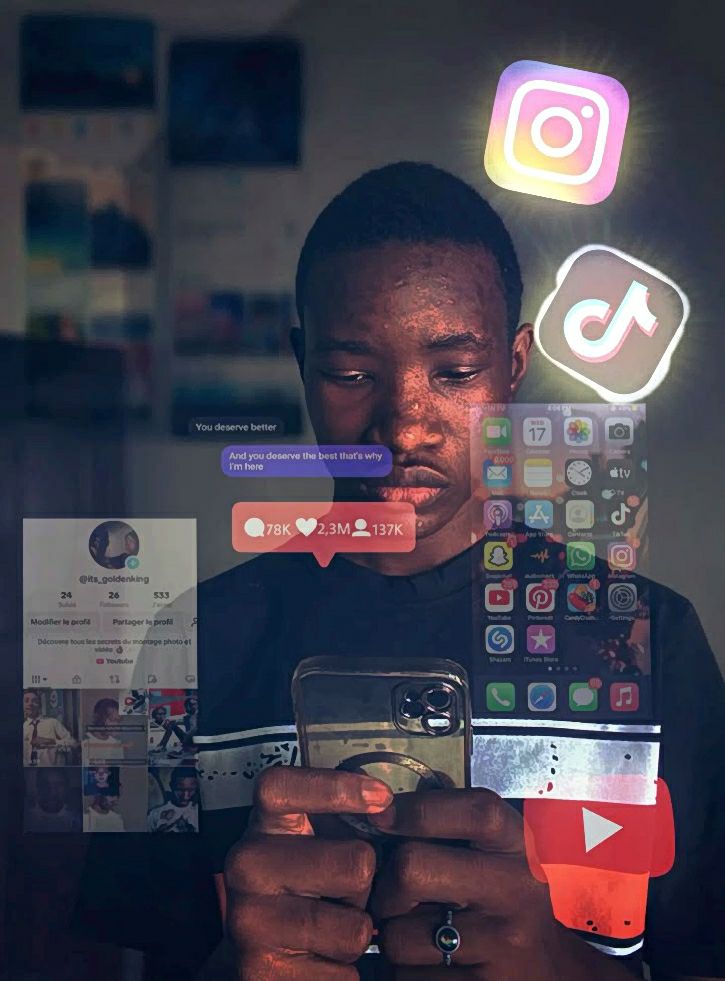
In a country where data bundles are tight and expression runs deep, WhatsApp has emerged as a cultural force breathing life into Nigeria’s literary scene. With over 51 million active users as of April 2024, Nigeria ranks among the top ten WhatsApp-using countries, contributing roughly 2% to the platform’s global user base. Owned by Meta and boasting over 3 billion users worldwide, WhatsApp’s ubiquity in Nigeria has made it not just a space for conversations and voice notes but a living, breathing archive of creative exchange. For Nigerian poets—especially young writers navigating a volatile economy and shifting social terrain—the app has become a portable, democratic stage where poems are written, shared, workshopped, and celebrated. From status updates to intimate poetry groups, WhatsApp is helping birth a new generation of digital griots.
Across the country, social media platforms like WhatsApp, Twitter/X, Instagram, Facebook, and TikTok have become vital springboards for poetic expression, community building, and visibility. What once required access to print publishing, gatekeepers, and formal recognition is now being redefined by the immediacy and accessibility of digital platforms. On these apps, young poets can post raw verses, record spoken word videos, spark conversations, and find audiences far beyond their immediate environment. These platforms not only allow poetry to flourish in real time but also foster networks of like-minded creatives who exchange feedback, share opportunities, and amplify one another’s voices.
The democratization of art through social media has ushered in a wave of emerging voices and propelled many more into the literary spotlight. Artists like Huwa Okoyomoh, Kingsley Ekpeyong, Jim Adie, and Ihuoma Uzomba, among others, actively use platforms such as TikTok, Instagram, and YouTube to engage a growing audience of poetry enthusiasts. Today, the accessibility of poetry has reached unprecedented levels—so much so that the verse that could change your life might be just a click, retweet, reel, or status update away.


Social media has also revolutionized how poets build community. In recent years, we’ve seen the rise of poetry collectives—small groups of writers teaming up to support one another and navigate the literary landscape together. Poems are shared and critiqued, open submission calls are circulated, ideas are exchanged, and wins—big and small—are celebrated. These are not spaces of competition but of collaboration. Notable collectives such as The Orange Poetry Group, the UnSerious Collective, The Poetry Collective, The Swan Collective, and KSR Collective embody this spirit of creative solidarity.
In an article for The Ex-Puritan, Adedayo Agarau articulates this moment as a necessary clapback against historical underrepresentation:
“We cannot deny that historically, Western educational institutions and publishing houses have acted as gatekeepers, determining which voices were deemed worthy of global attention. This system of literary apartheid effectively silenced or marginalized countless Nigerian and African poets, regardless of the quality or significance of their work. The recent 'discovery' of Nigerian poetry by the global literary establishment is less a testament to its sudden emergence than an indictment of the systemic biases that have long obscured it…. Because of how competitive it is for African poets—which may also be argued to be one of the reasons why we must be so good—I and six other poets—Agbaakin Jeremiah, Adebayo Kolawole, Pamilerin Jacobs, Michael Akuchie, Wale Ayinla, and Nome Emeka Patrick—started the UnSerious Fellowship, which awards four Nigerian poets annually with financial and editorial support.
These collectives often begin as informal WhatsApp groups or emerge from discourses on Twitter and gradually evolve into tight-knit communities bound by one question: advancement. How can the Nigerian literary community evolve? How can the individual poet grow, be heard, and be recognized both locally and globally?
Through these grassroots networks, the burden of literary labor becomes lighter. Poets grow in tandem, dutifully tilling the soil for the next generation of voices. Literature, in all its forms, is a crucial part of cultural memory. It preserves the pulse of a people—their stories, struggles, joys, and transformations. What were the stories told about this place? Who were these people? How did they feel, dream, grieve, and live?
In a digital age where voices can echo across borders with a single post, Nigerian poets are reclaiming space, rewriting narratives, and reminding the world that literature is not confined to bookshelves or classrooms—it’s alive in our phones, in our groups, on our timelines. From WhatsApp to the world, Nigerian poetry is alive and thriving.