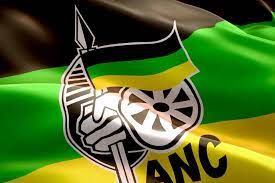
A Review of Chinedu Dike's “Anc And The Struggle”
By Chimezie Umeoka
January 1912, Mzansi brought forth a child
In a harsh political climate
Destined to free her people
Bound to cruel Fate
Long Live Child Of Necessity!
Viva ANC!
His growth fraught with perils
But nurtured by sons and daughters of the soil
Deprived of dignity and birthright
Whose principal offence is not being 'White'
Long Live Son Of The Soil!
Viva ANC!
His clarion call an impetus to the Struggle
Unifying localized forces of Freedom
Into a mass-based Liberation Movement
Brought into the realm of Global Awareness
Long Live Symbolic Leader Of The Struggle!
Viva ANC!
Fighting against enormous odds
Together with hopeful but ill-equipped natives
Onto the spirit he anchored Power
Victory guaranteed on Resolve
Long Live Son Of Hope!
Viva ANC!
Braving the slammer, torture, bullet...
Massacre of his warriors the order of the day
Energized by tears and blood of compatriots
Civil Disobedience intensify with Sabotage
Long Live The Indomitable Warrior!
Viva ANC!
At long last, triumph and jubilation
Forces of Liberty topple forces of Oppression
Embracing 'no winner no loser' notion
He calls for 'Rainbow Nation'
Long Live Son Of Liberty!
Viva ANC!
Long Live The Symbol Of Human Dignity!
Viva The Legacies Of African National Congress!
It is a fact that South Africa has had a long history of racial segregation, popularly known as apartheid. This was a result of Western influence, pioneered by the Dutch, who infiltrated the communal land of the Bantu people, and the Khoe-san aboriginal people of South Africa, as far back as the 17th century. While this history has led to centuries of embittered crises, it has also given rise to several revolutionary movements and change makers like Nelson Mandela, proving that humanity can always rise against injustice. One of these pivotal movements, known for its strict opposition against the apartheid regime, is the African National Congress (ANC), which also drives the thematic centre of Chinedu Dike's poem.
At first glance, the poem's title, with its lower-case placement of the movement ANC, appears to be the title of some ballad, denoting a man's struggle or an element of natural force. However, this is only the poet's creative use of symbolism to characterize the poem with a sense of traditional African aesthetics.
“January 1912, Mzansi brought forth a child.”
Dike begins this poetic journey on a figurative note, using the affectionate pseudonym ‘Mzansi’ to replace South Africa and personifying it as a mother who brought forth a child. The child born in January 1912 was the African National Congress (ANC), which came during a period of harsh political climate. In elegant turns of verbosity, Dike lyrically chronicles the setbacks that befell this revolutionary movement. The poem also highlights, in the second stanza, the struggles of indigenous South Africans, describing them as people “whose only cardinal offence is not being white.” It is this cause that drives the African National Congress to survive its trials, occasionally regrouping itself with patriotic, localized forces.
In the case of this poem, Dike uses the persona of a warrior-like man to express the predicament of the ANC. The image of the man is enlarged, glorified even. We view him as a kind of towering giant, being ‘slammered, tortured’ by a Lilliputian civilisation. This same man is portrayed to have an emotional core, beyond the aegis of his power. A core which allows him to be inspired by the tears and blood of his compatriots. By the end of the poem, the man is now revealed to be a mere symbol, a metaphor for the African National Congress.
‘Anc and the Struggle’ conditions itself as an ode to a revolutionary movement, yet also employs different poetic aesthetics to drive its themes. It reverberates with a certain musicality, slightly bridged by the recurrent chants ending each stanza. Perhaps it is the poet's inclination towards the traditional poetic form, bringing a novel association to the talent of Okot b’Pitek.
However, not minding the implications of unnecessary repetition, the poet goes on to laden each stanza with the same passionate theme of oppression. This makes the poem permanently come off as a victory chant to the African National Congress, which subsequently rose from the ashes of the apartheid era to take the front leadership position of the post-apartheid Republic of South Africa. It is a transitional exposition of the movement's struggle, an intellectual outcry resonating with a movement on the threshold of liberation.
Reference Sources:
Wikipedia
Poem Hunter