Global Renewable Energy Milestones
China: Surpassing 1 Terawatt of Solar and Wind
By the end of March 2025, China's installed capacity of wind and solar energy reached approximately 1,482 GW, surpassing the country’s thermal power capacity for the first time (Reuters). Solar alone accounts for over 1,000 GW—about half of global solar capacity, a scale unmatched by any other nation (The Guardian).
Between January and May 2025, China added 198 GW of solar and 46 GW of wind—more new capacity than the total generation of countries like Turkey or Indonesia (The Guardian). Despite these gains, renewable sources contributed only about 22.5% of electricity consumption during Q1 2025, as grid systems and dispatching practices continue to favor fossil fuels (Reuters).
Ireland: Phasing Out Coal
Ireland has successfully exited coal-fired electricity generation, part of a broader European push toward net-zero energy systems. The country retired its coal plants in alignment with EU climate targets and now relies heavily on wind, solar, and bioenergy to meet demand. Though not as headline-grabbing as China’s expansion, this milestone underscores the quiet success of wealthier nations making structural transitions away from carbon-intensive power.


Nigeria: Renewable Energy Adoption and Community Impact
Installed Capacity and Growth
Nigeria added 73 MW of solar capacity in 2024, bringing its total to 385.7 MWp, making it one of Africa’s leaders in new installations for the year (Nairametrics). Nevertheless, solar still makes up only around 1.6% of the national energy mix (The Guardian Nigeria).
Looking forward, Nigeria aims to reach around 2 GW of solar photovoltaic capacity by 2025 and 1.7 GW of total renewable energy by 2035 (GlobalData). Under the Renewable Energy Master Plan, Nigeria targets a 36% renewable share by 2030, though current trends suggest this will require substantial policy and infrastructure improvements.
Financing and Government Initiatives
The Nigeria Electrification Project, backed by the World Bank and implemented by the Rural Electrification Agency (REA), has deployed over 120,000 off-grid systems and trained more than 5,000 solar technicians nationwide (Itele Media).
In March 2025, Nigeria signed a $200 million deal with WeLight to develop 400 renewable mini-grids and 50 MetroGrids, expected to reach 1.5 to 2 million people in rural areas (Reuters).
Additional government action includes a ₦500 billion budget allocation for solar electrification in public institutions, a move aimed at reducing diesel dependence and promoting clean energy access (PVKnowHow).
Community-Level Impact
Recent studies of mini-grid programs in Nigeria and Kenya show measurable gains in income, safety, and productivity for off-grid communities (arXiv). In Bauchi State, over 1,200 households received solar home systems via REA initiatives, with 78% reporting improved productivity for home-based businesses (Itele Media).
In Gombe, solar installations have enabled families to refrigerate medication and reduce energy costs by 40%, while in Jigawa, farmers using solar irrigation systems have reported 35% yield increases.
Organizations like Solar Sister Nigeria are empowering women through solar entrepreneurship. Over 15,000 solar units have been distributed by trained female energy entrepreneurs, enabling safer lighting and extended study hours for students (Itele Media).
A Global Shift with Local Implications
While China dominates the global supply chain and deployment scale for renewables (Financial Times), countries like Ireland are demonstrating how complete transitions away from coal are achievable within relatively short timelines. These developments set benchmarks and offer roadmaps for emerging markets.
In Nigeria, the energy transition is not just a climate issue—it is an economic and social imperative. As subsidies on fossil fuels are phased out and grid reliability remains low, off-grid solar has become a lifeline. From solar-powered irrigation to schoolchildren studying by clean light, renewable energy is beginning to transform lives in measurable ways.
Outlook to 2030 and Beyond
- China plans to add another 246.5 GW of solar and 97.7 GW of wind in 2025 alone (Financial Times).
- Nigeria is expected to hit 1.7 GW in total renewables by 2035 if current policies are maintained (GlobalData).
- While infrastructure, financing, and policy hurdles remain, distributed solar and mini-grid adoption point toward a grassroots energy revolution.
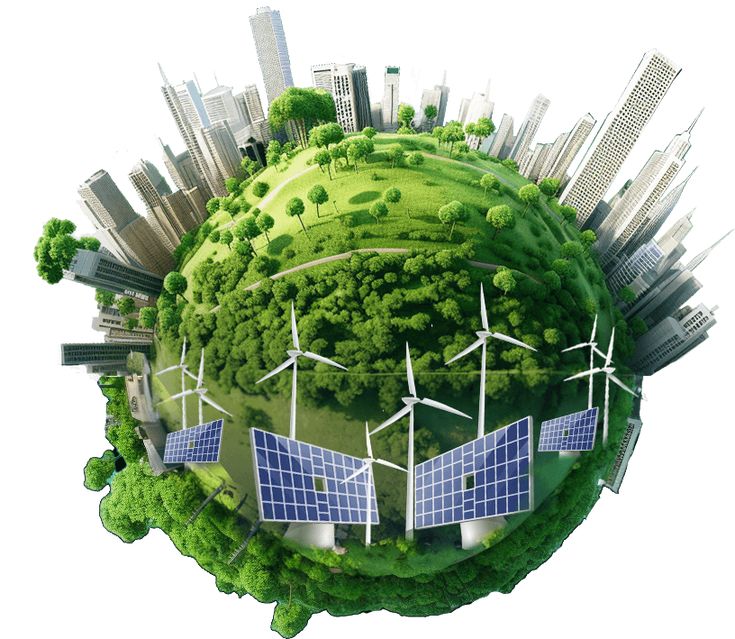
Ultimately, global milestones like China’s 1-terawatt achievement and Ireland’s coal exit show that large-scale renewable transitions are not only possible but well underway. Though Nigeria's progress is more modest, it is rich with promise. Government investment, community entrepreneurship, and local innovation are converging to shape a distinctly African renewable energy path—one grounded in resilience, adaptation, and self-determination.
As the world races toward a net-zero future, the success of Nigeria and other African nations will be essential—not only for regional development but also for global climate goals.
WRITTEN BY CHINAZA-IBE